
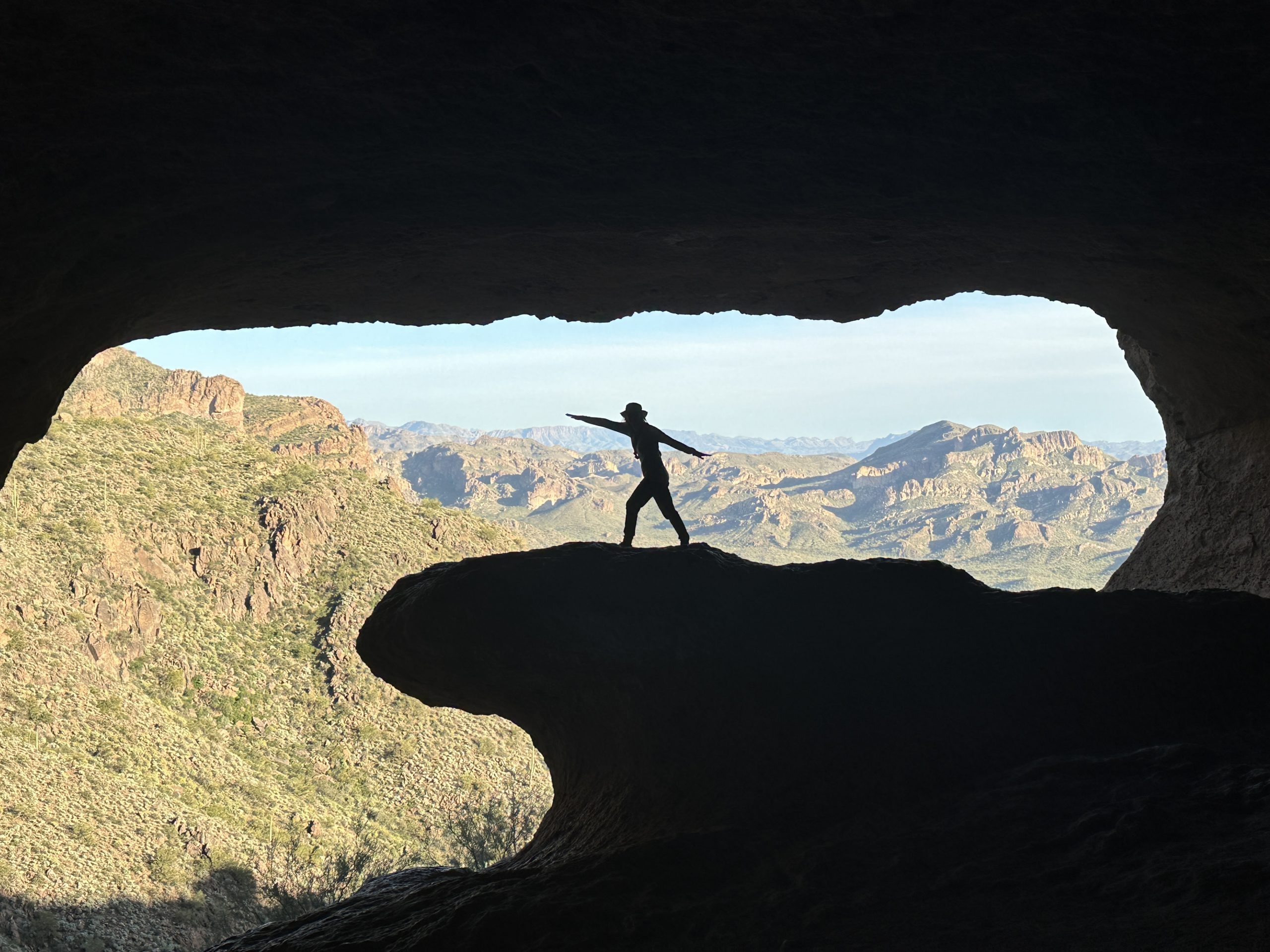
A few years ago, we had a blast when we met my husband’s Minnesotan aunt and uncle in southwest Colorado for Jeeping and hiking adventures around Ouray. So, at the end of January this year, we road-tripped 800 miles from Tahoe to the Gold Canyon area outside Phoenix, AZ, aiming to grab a few hikes and do some Jeeping with them once again. (Based on license plates, we surmised that a lot of folks from the upper Midwest escape to Arizona during the bitter cold winters.)
Traveling from Lake Tahoe to Gold Canyon takes about 13 hours of total drive time, which we split across two days on the road. Upon our arrival, the first item on our itinerary was a hike to Wave Cave.
From where we were staying in Gold Canyon, the trailhead was only a few miles’ drive, so we headed there the same day we arrived, hoping to squeeze in this short 3.7-mile hike before we ran out of daylight.
The hike to Wave Cave is a popular Superstition Wilderness destination, a part of the Sonoran Desert. We were there in the late afternoon on a Thursday in January, so the parking lot only had a few vehicles in it, but we’ve heard that it can get extremely busy during peak season. It is also worth noting that hiking in the desert brings with it bitey reptiles and sharp, pokey plants – so, look alive!
Speaking of pokey plants…
Saguaro Cactus
This wasn’t our first trip to Arizona, but one of the specific aspects of this trip that we were looking forward to was seeing saguaro cacti. We’ve been in areas with smaller cacti, like prickly pear and barrel, but neither of us had ever been around saguaros yet. So, we were hoping we’d get to see “a few.”
😂
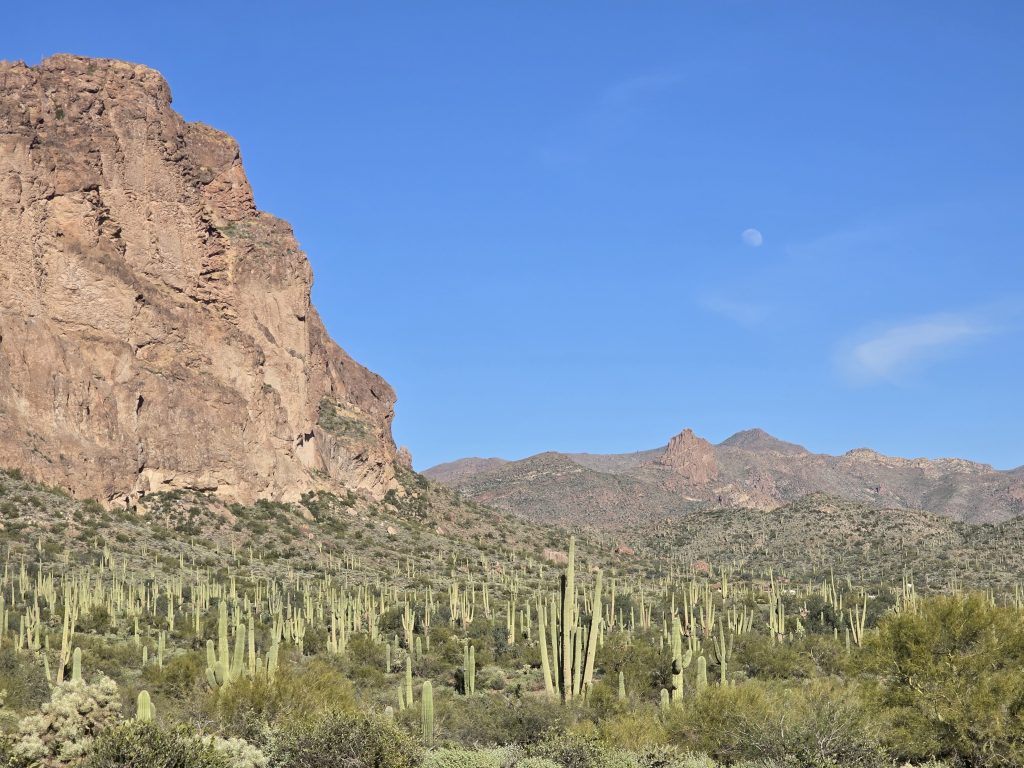
It turns out, saguaro cacti are everywhere in this part of Arizona, so it was not hard to find them. Needless to say, we remained a little bit obsessed with them throughout this trip. It was fun to see numerous varieties of cacti and other native flora and fauna on our trip to Arizona, which were so different from our typical high-desert alpine vegetation.
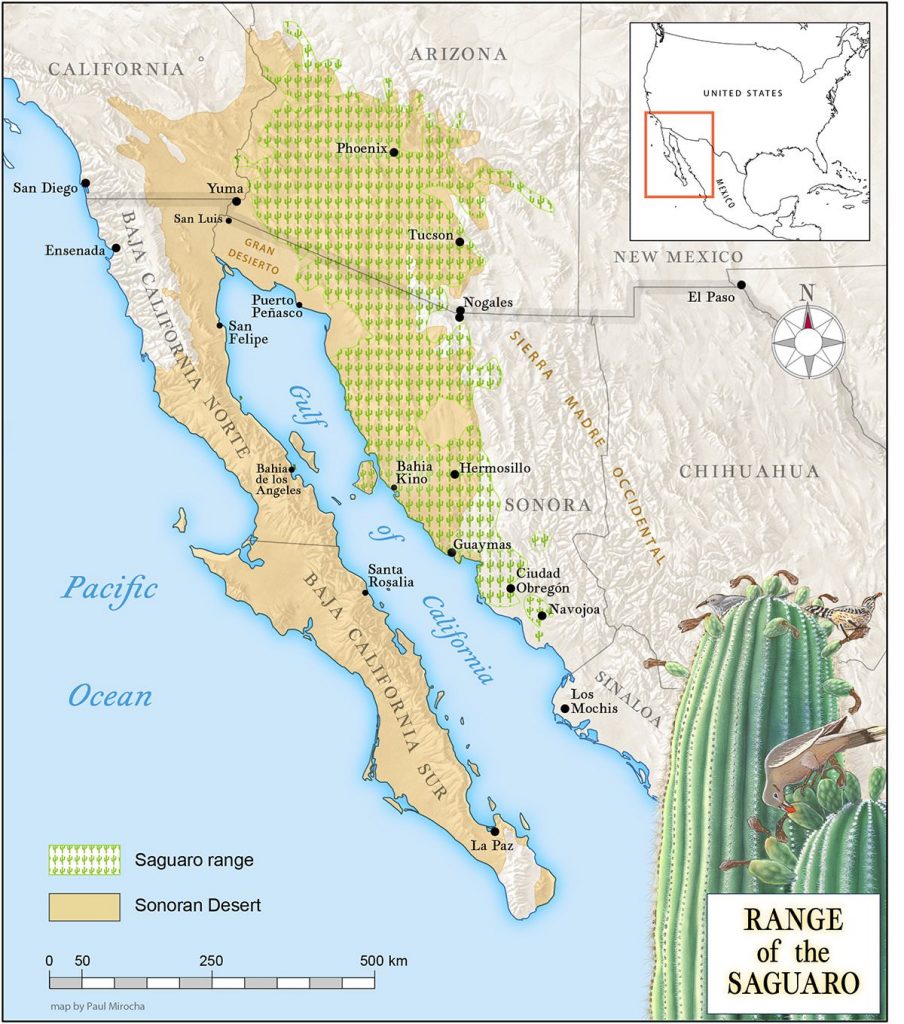
Saguaro cacti exclusively grow in the Sonoran Desert, and they are the largest cactus in the United States, growing 10 to over 50 feet tall with a lifespan of up to 200 years. Their root systems can extend as far as 100 feet.
The saguaro’s signature upturned arms (as many as 24!) develop at 75 to 100 years of age. Saguaros that never grow arms are called spears.
To survive the dry desert climate, saguaros absorb and store rainwater, and their sharp spines that grow up to three inches long help protect them from thirsty animals and the sun.
Hike to Wave Cave
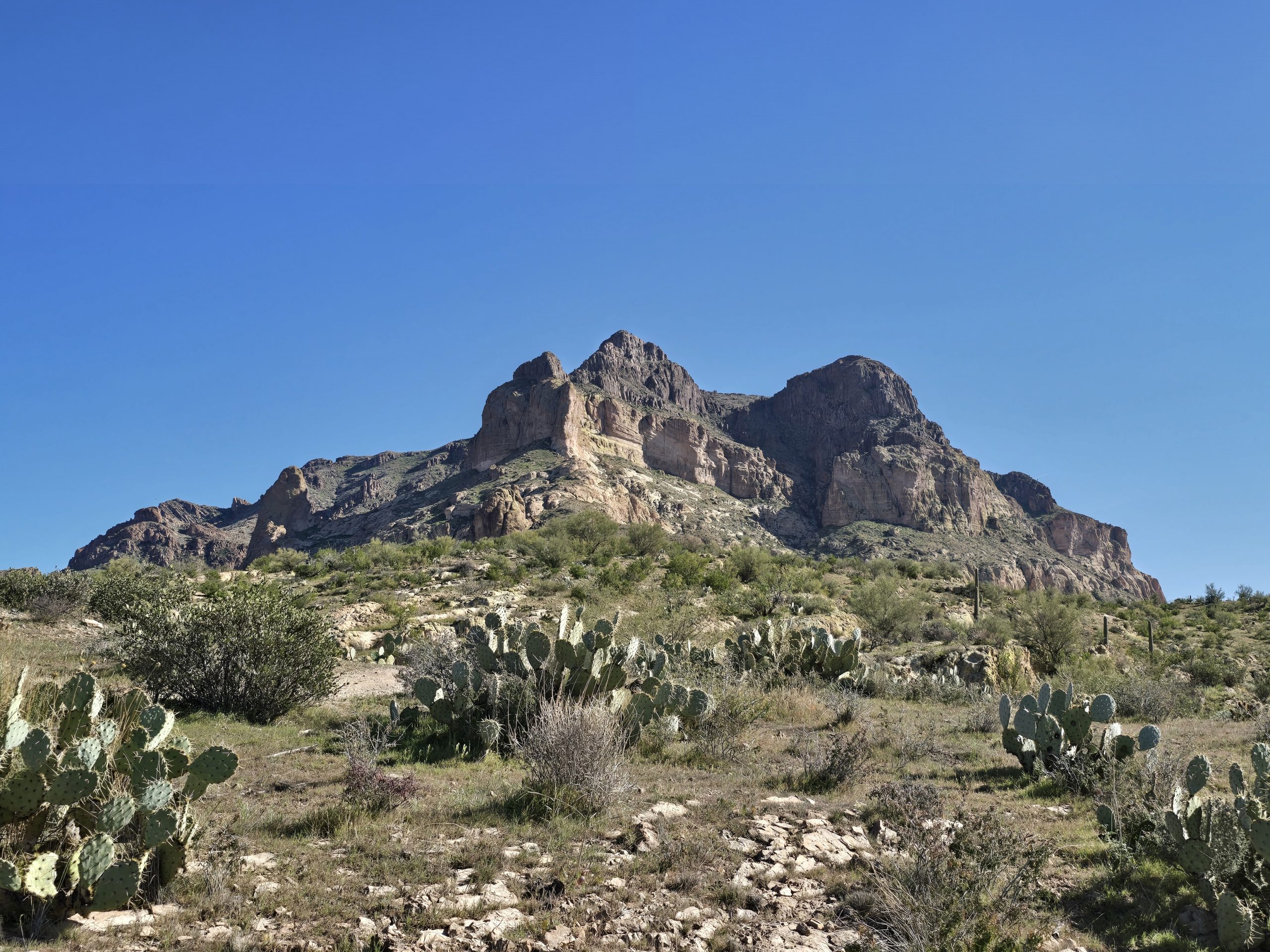
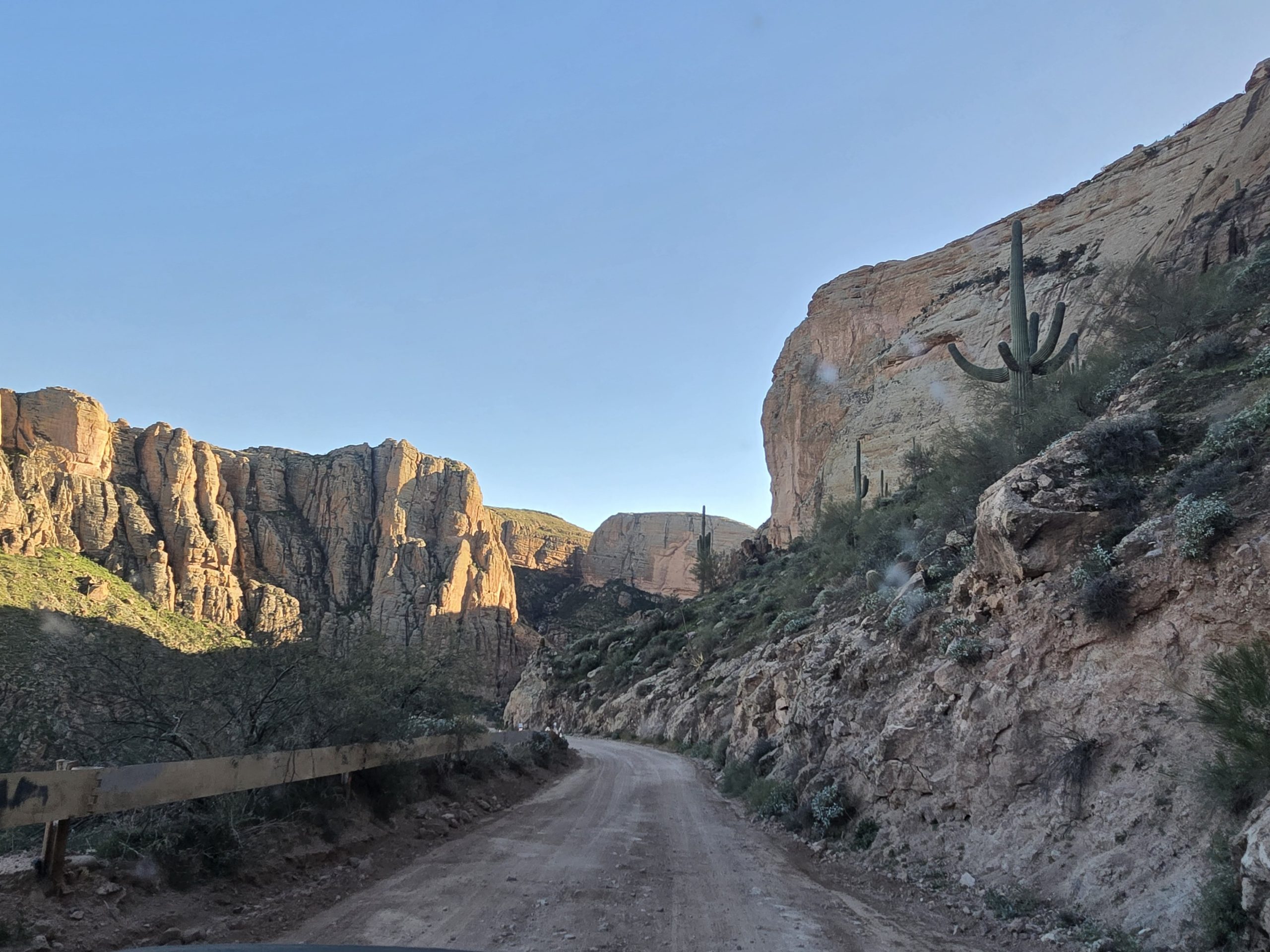
We began our route at the trailhead off Carney Springs Road, off Peralta Road. The hike to Wave Cave started out easy, winding through desert landscape, towering saguaros, colorful wildflowers, and jagged rock formations.
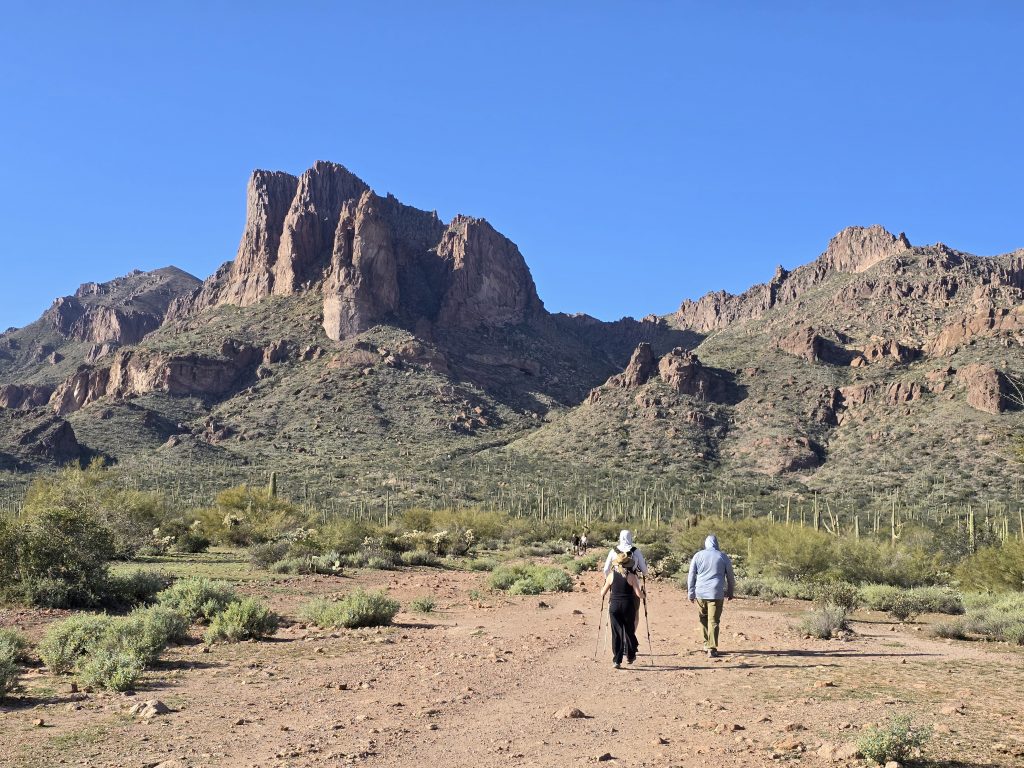
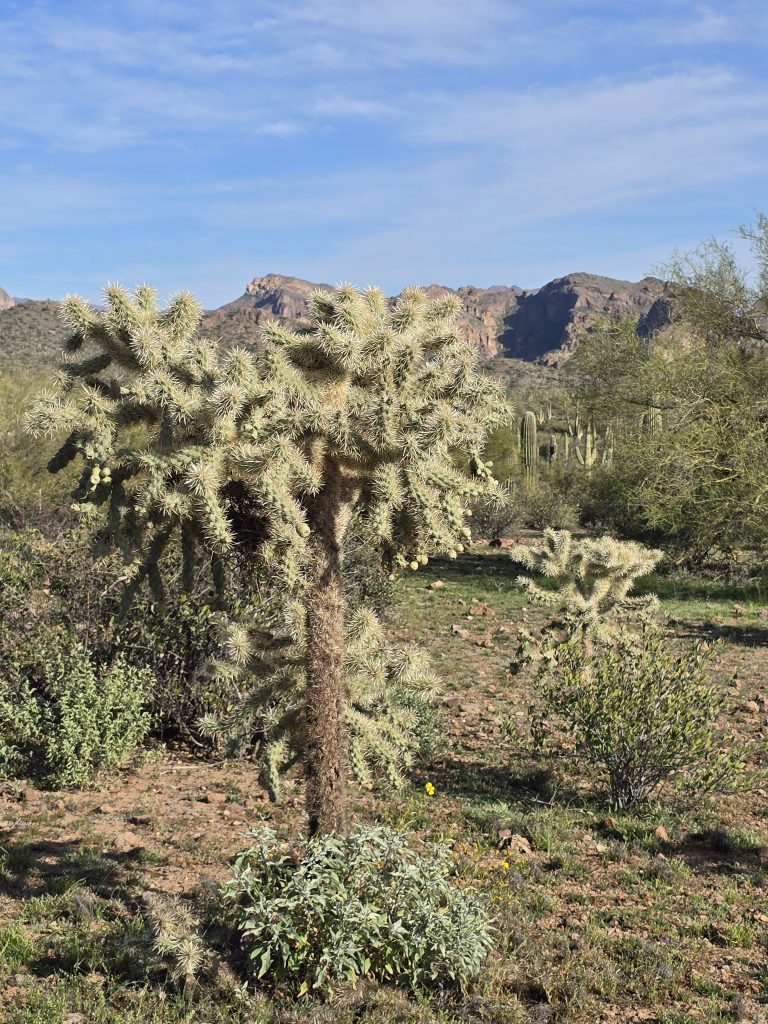
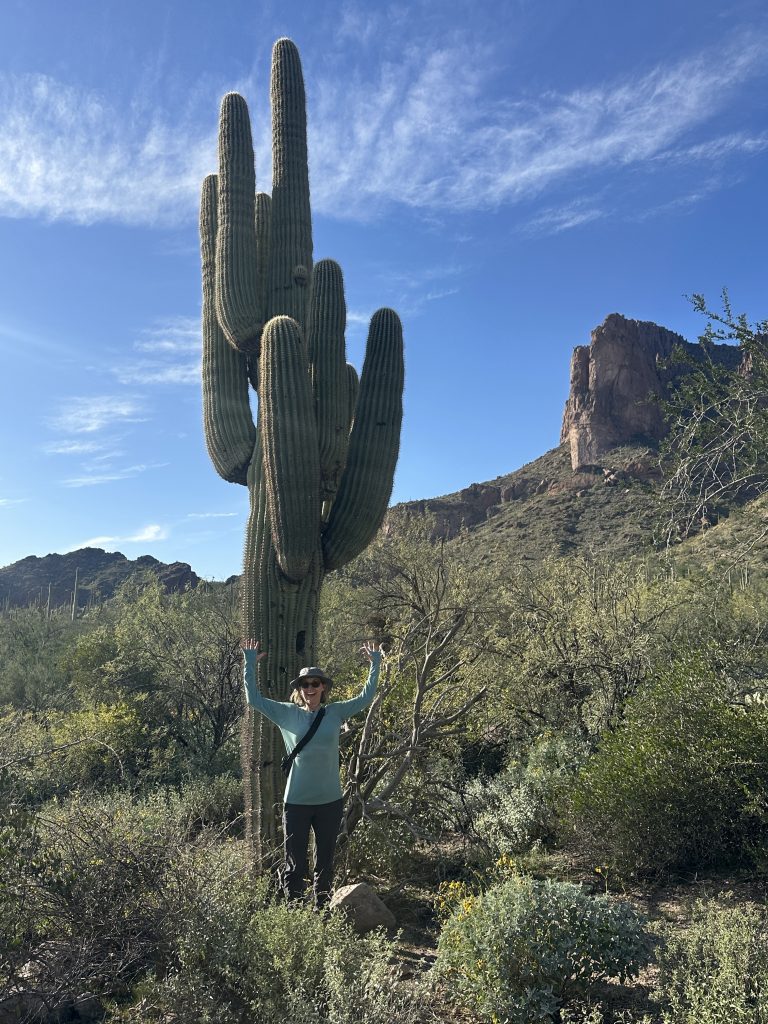
A little over a half-mile into the hike, the uphill grade of the trail began to steepen, and we had to start climbing over a few sections of boulders on the trail. The closer we got to the Wave Cave destination, the steeper and looser the trail got. My husband’s aunt and uncle had brought their hiking poles on this hike, but we did not. They probably would have come in especially handy on the descent.
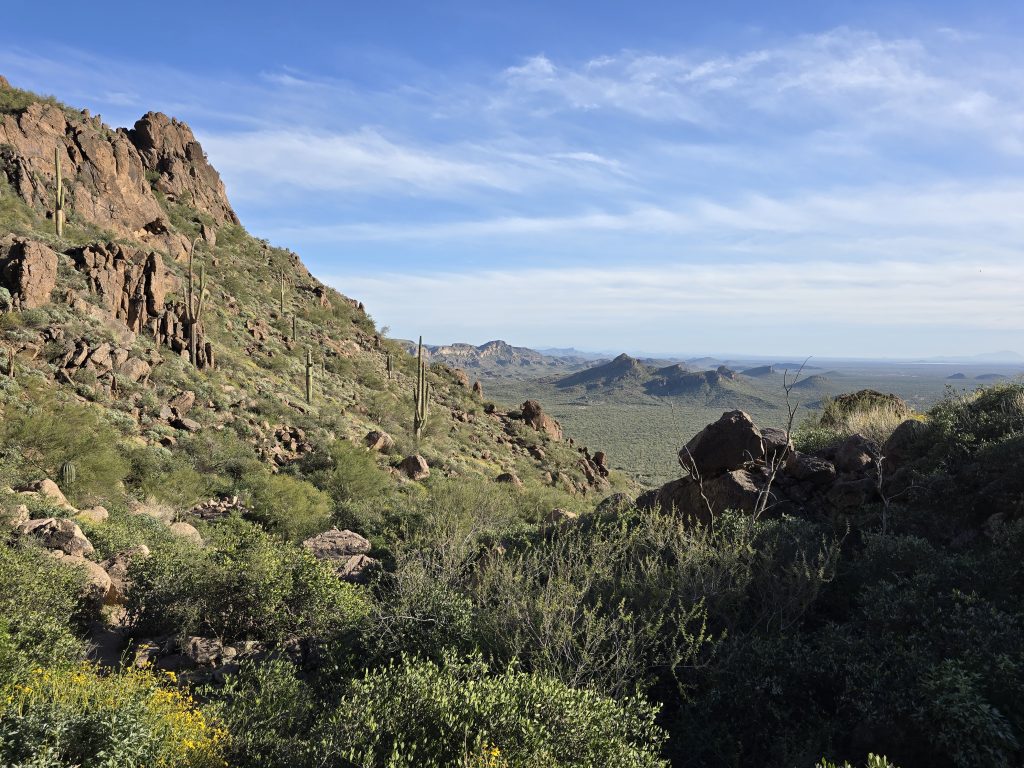
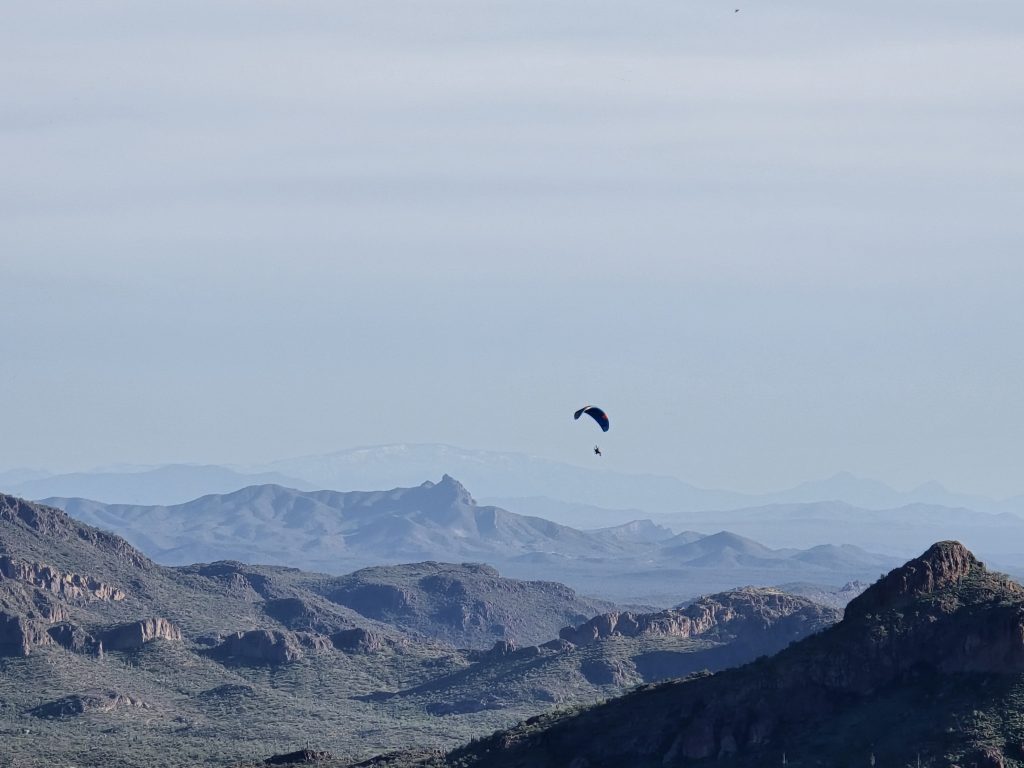
After less than two miles of climbing and a little bit of scrambling, we made it to the iconic Wave Cave.
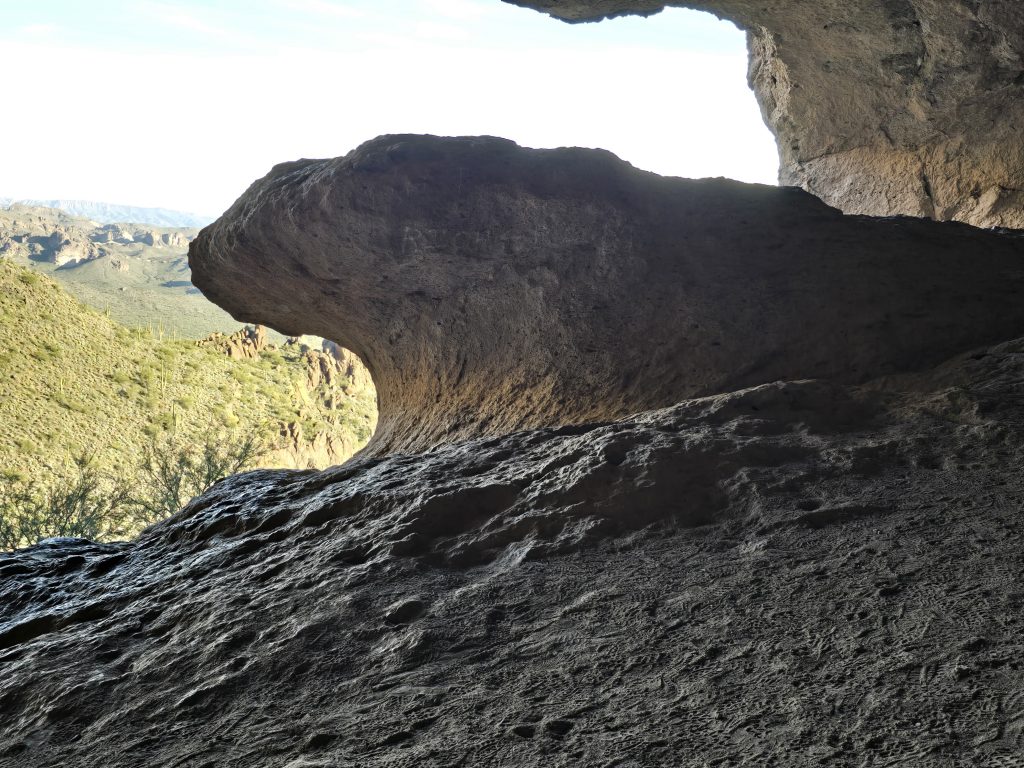
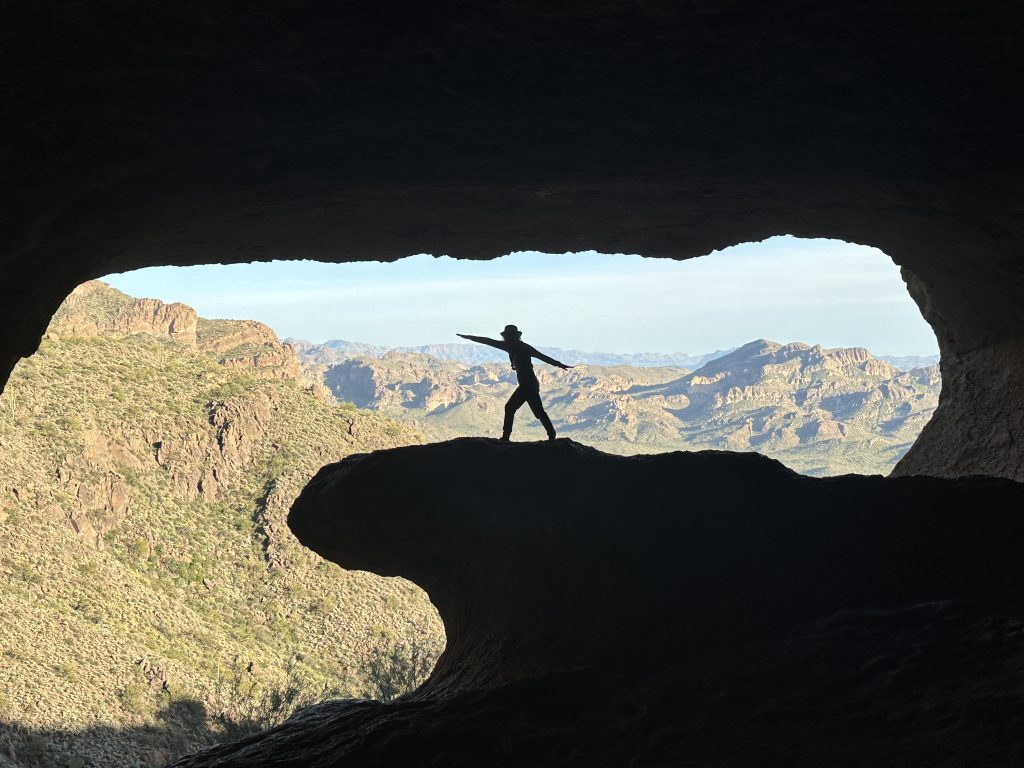
The sun was getting lower, and our stomachs were getting hungrier, so after taking in the views and posing for a few photos, we carefully began our loose-trail descent.
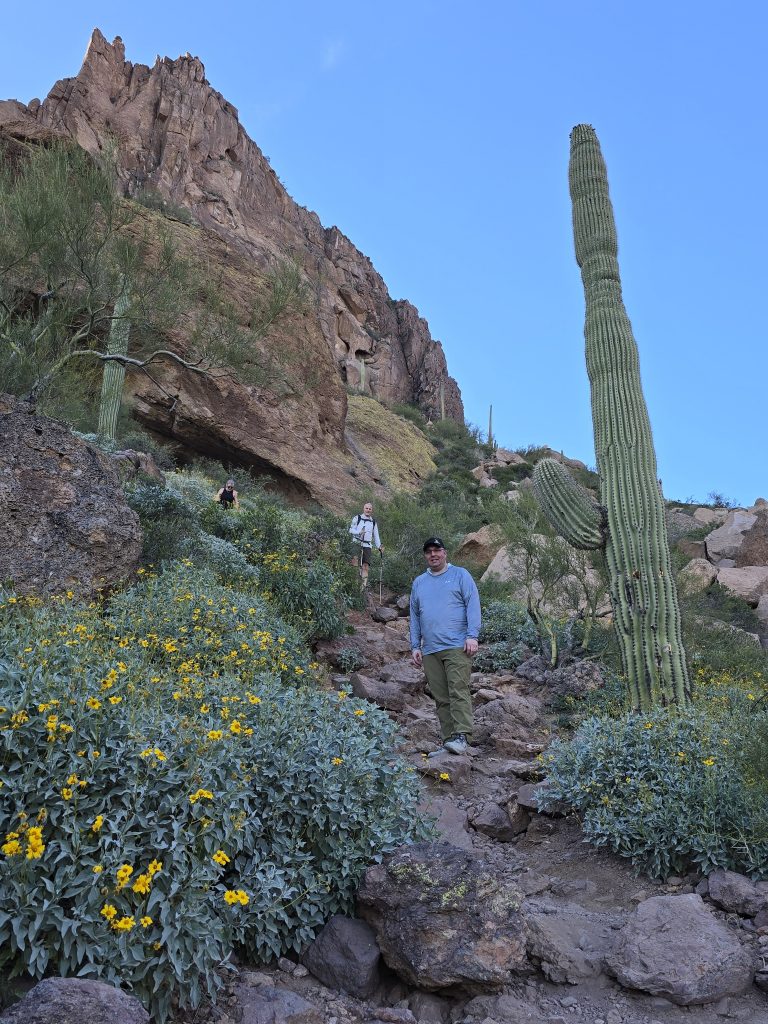
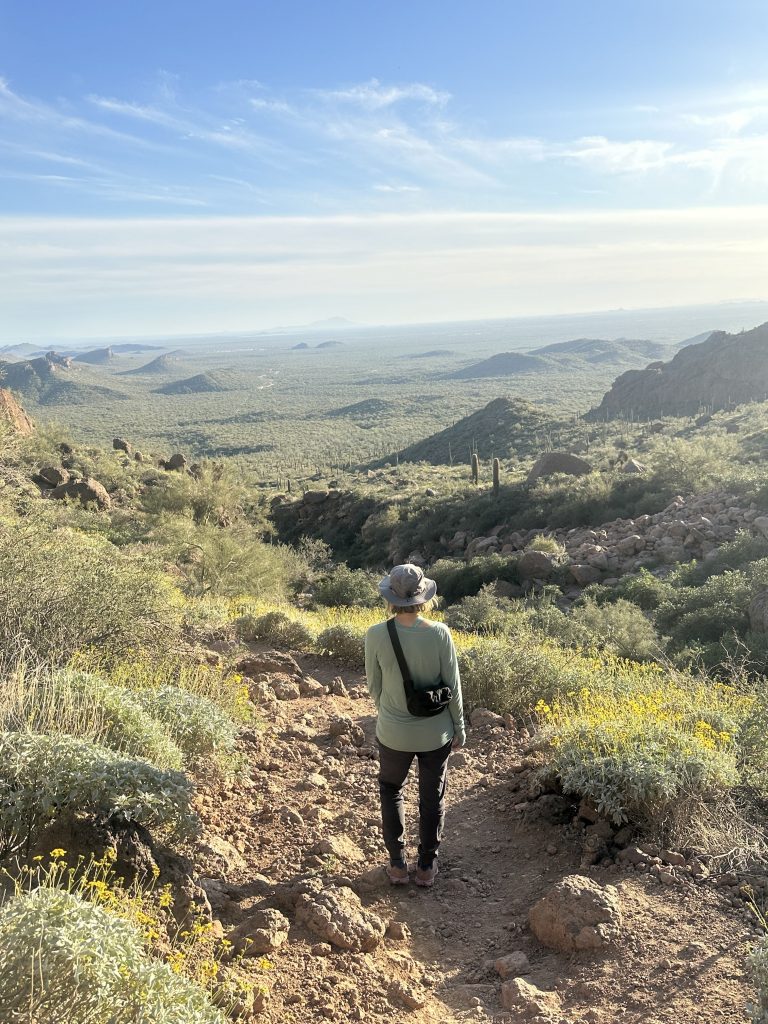
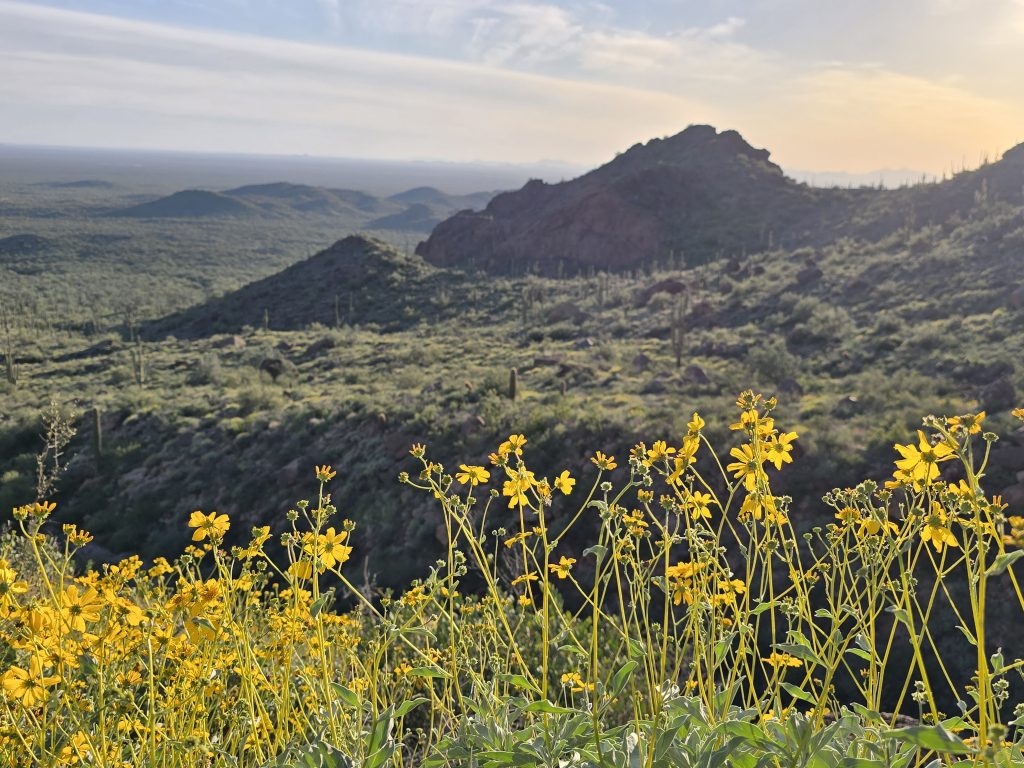
The hike to Wave Cave was a great way to kick off our brief winter Arizona getaway! Following the hike, we went to the busy Gold Stallion Restaurant in Gold Canyon, AZ, for dinner.
Wave Cave Hike Stats
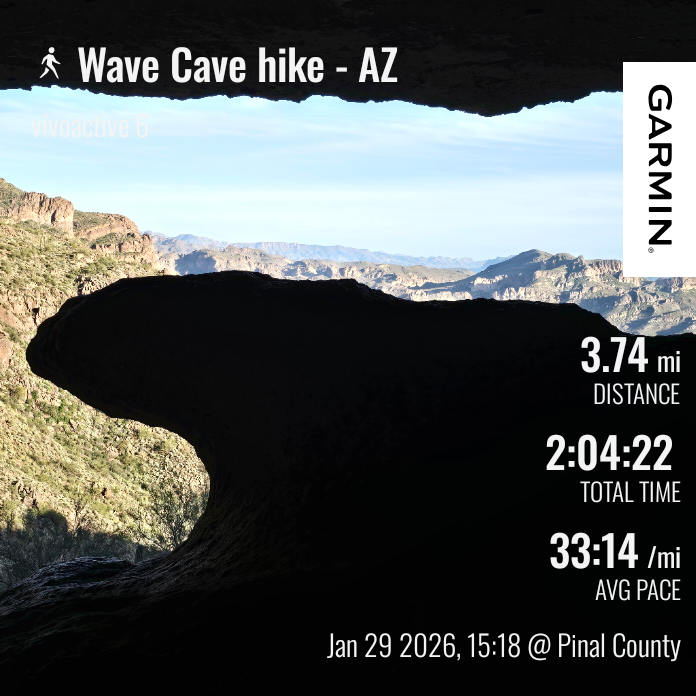
| Wave Cave hike | |
|---|---|
| Total Distance | 3.74 mi |
| Total Time | 2:04:22 |
| Total Ascent | 1,316 ft |
| Max Elevation | 3,206 ft |


Leave a Reply